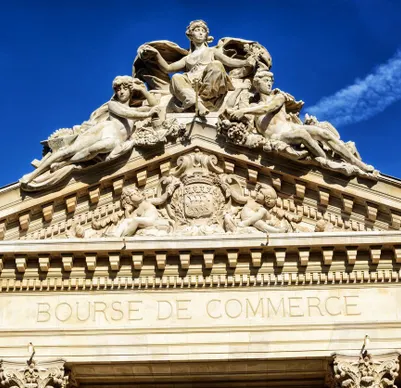
Commodity exchange The Pinault collection
The Bourse de Commerce is located in the heart of Paris, in the 1st arrondissement, near the famous Palais Royal district. It is easily accessible and offers the opportunity to visit other nearby tourist sites.
Location of the Stock Exchange
The Bourse de Commerce is located in the heart of Paris, in the 1st arrondissement, near the famous Palais Royal. Its exact address is: 2 rue de Viarmes, 75001 Paris.
Its central location makes it easily accessible and allows visitors to also enjoy the many other nearby tourist sites.
Schedules and practical information
Discover the opening hours of the Bourse de commerce to plan your visit in peace:
open every day (except Tuesday): from 11 am to 7 pm (9 pm on Fridays).
Note: on the first Saturday of the month, free evening opening from 5 pm to 9 pm.
It is recommended to check the ticketing information on the museum's official website.
Commodity exchange: what are the entrance fees?
The Bourse de Commerce offers various entrance fees.
Full price: €15 Price for 18-26 and other discounts: €10 Free entry after 4 pm for Super Cercle cardholders.
Important: Reservation is highly recommended.
Please note that prices may vary, so it is advisable to check the official website for the most up-to-date information.
How to get to the Bourse du Commerce?
The Bourse de Commerce is accessible by metro via the following stations:
- Les Halles served by line 4
- Châtelet served by lines 1, 4, 7, 11, and 14
- Louvre-Rivoli served by line 1
It is also possible to reach it by bus with lines 74, 85, 21, 67, 70, 69, 72, 38, 47, 58, and 76.
For those who prefer the RER, the Châtelet-Les Halles station offers direct access to lines A, B, and D.
Finally, cycling enthusiasts can opt for the Vélib' stations located near the site.
Please note that this information is provided for guidance and it is always recommended to check the schedules and routes on the official public transport website before your visit.
Practical tips for visiting the Bourse de Commerce
Before heading to the Bourse de commerce, here are some practical information to make the most of your visit:
- Duration of the visit: plan for about 1 to 2 hours to explore all the collections and exhibitions.
- Best time to visit: the Bourse de commerce is generally less crowded in the early morning or late afternoon. Try to avoid peak times like weekends or holidays if you want to enjoy a more peaceful experience.
- Recommended attire: a casual yet respectful attire is appropriate for your visit. Remember to wear comfortable shoes, as there may be a lot to explore.
Also, feel free to check the official website of the Bourse de commerce for all updated information regarding opening hours, prices, and any potential restrictions related to current health conditions. Enjoy your discovery.
Commodity exchange, what to visit around
Here are some museums and gardens to discover around the Bourse de commerce:
- The Louvre: come and admire one of the largest art collections in the world, located just a few steps away from the Bourse.
- The Jardins du Palais Royal: enjoy a peaceful stroll in these magnificent gardens.
- The Centre Pompidou: explore this iconic museum dedicated to modern and contemporary art, which is not far from there.
These different attractions offer a variety of cultural and artistic experiences in the immediate vicinity of the Bourse de commerce.
Did you know?